Skip to content
Classroom-to-Career Resources

Implementing FIRST® in Career and Technical Education

FIRST empowers students through leadership, career exploration, and hands-on learning that align with CTE pathways.

FIRST Learning Pathways

FIRST students engage in coursework across career clusters like engineering, manufacturing, instructional technology, and more, all while gaining hands-on experience through robotics and project-based learning. These learning pathways help students build confidence, achieve technical skill attainment, and prepare for certifications that can enhance college and career opportunities. Aligned with Career and Technical Education (CTE) standards, each level of coursework is designed to scaffold learning while encouraging creativity, problem-solving, and technical fluency.

Explore our available learning pathway levels below, which can be implemented across various instructional environments, including classrooms, afterschool programs, or independent learning. For each course, example syllabi and equipment needs are provided to help educators and students plan ahead. 

Explore Course Levels in Engineering and Technology, Manufacturing, and Instructional Technology

FIRST Education is continuing to develop resources for classroom and independent learning that can help students and teachers utilize FIRST with course content that prepares them for advanced certification. These structured course levels support student progression from exploration to advanced technical skills and community-driven capstone work.
Level 1: Foundational Skills

Click the title of each course description to view the course outline

Engineering Explorations

Prerequisite – None

Equipment requirements – XRP Robot or FIRST® Robotics Competition Kitbot, or FIRST® Tech Challenge Competition Set

This Engineering Exploration course immerses students in engineering, robotics, coding, and game-based learning through real-world, team-based challenges. Grounded in the FIRST Core Values, the course fosters collaboration, innovation, and hands-on problem solving. Students research a real-world issue, design an innovative solution, and build a game-ready robot to present at an end-of-course event. Along the way, they develop essential 21st-century skills including technical writing, communication, project management, and teamwork. In the second semester, students apply their learning while designing a robot for the FIRST Team Competition.


Introduction to Engineering 

Prerequisite – None

Equipment requirementsFIRST Tech Challenge Edubot or FIRST Tech Challenge Competition Set

Incorporate hands-on learning, career exploration, and workforce and industry-ready skills into your classroom or after-school curriculum using the FIRST Tech Challenge Class Pack curriculum and resources. In this yearlong course, students are given online access to the curriculum, learning videos, and physics simulations. They spend time building the basic robot using a build guide and a mini-game competition provided with the curriculum. Then, they spend additional time understanding the game and developing a robot plan on how to design manipulators for the game. This approach gives students an introduction to the many different types of manipulators they might add to the robot and some of the basics of the physics required to design and build manipulators. They have a limited time to iterate the design before a competition. The Careers unit occurs at the end of the entire course for students who continue for a whole year. This approach gives students more time to develop mechanisms, design, and iterate.


Introduction to Programming (Java)

Prerequisite – None

Equipment requirements – XRP Robot or FIRST Robotics Competition Control System

In this course, students learn fundamental understanding of Java programming within WPILib and obtain widely applicable skills in programming that they can transfer to industry credentials. Students will learn fundamental programming concepts such as methods, objects, conditionals, loops, arrays, command-based programming and errors and troubleshooting. Students apply their knowledge to programming a robot that completes an obstacle course with feedback checkpoints. This course enables students to complete tasks with the XRP robot as well as the Romi. Students then can go on in the second semester to further their knowledge to prepare for the Java SE 8 Programmer Exam or an AP Computer Science Exam using external courses.


Work-Based Learning Level 1

See FIRST Tech Challenge or FIRST Robotics Competition Work-Based Learning Toolkits.

Level 2: Intermediate Projects

Click the title of each course description to view the course outline

Engineering Principles

PrerequisiteFIRST Tech Challenge Class Pack Year 2

Equipment requirements – None

In this course, students build on their foundational knowledge to deepen their understanding of engineering principles, including machines, mechanisms, and the physics beyond robot design. They apply the engineering design process through iterative development and explore advanced programming using Java. The course also introduces concepts including machine learning and vision-processing.


Engineering and Fabrication

Prerequisite – Engineering Explorations

Equipment requirementsFIRST Robotics Competition Rookie Kit, FIRST Tech Challenge Competition Set, additional prototyping materials (plywood, 3D printers, stock aluminum, etc.).

In this course, students apply the engineering design process to develop skills in engineering and fabrication. The course aligns with OSHA Safety and Associate CAD certifications, based on the teacher's selected program. Through project-based learning, students design and fabricate  mechanisms that can complete tasks such as picking up an object and transferring it to another location in two stages. Along the way, they explore automation concepts using belts, sprockets, and conveyor systems. The course culminates with a class competition to test and showcase their designs. 


Industry 4.0 and Robotics Fundamentals

Prerequisite – Robotics Engineering Explorations or a combination of Introduction to Programming and Introduction to CAD

Equipment requirements – XRP Robot or FIRST Tech Challenge Control System, 3D Printer, or other fabrication tools

In this course, students design and build an industrial-style robot while developing skills aligned with the SME Robotics Fundamentals and Manufacturing Certification. Working collaboratively, they create a class factory that produces promotional materials for the school. The factory utilizes manufacturing techniques and automation to streamline the process. 


Work-Based Learning Level 2

See FIRST Tech Challenge or FIRST Robotics Competition Work-Based Learning Toolkits.

Level 3: Advanced Skills & Certification

Click the title of each course description to view the course outline

CNC Fabrication

Prerequisite – Introduction to CAD and Engineering and Fabrication

Equipment requirements – Haas CNC Machine, or Mastercam CNC Machine

In this course, students develop foundational skills in CNC technology using lathes and milling machines. Aligned with industry standards, the course supports pathways toward certifications such as Haas CNC, Mastercam, and Driveworks. Students apply their learning in ways that strengthen their workforce readiness and their contributions to their FIRST Robotics Competition or FIRST Tech Challenge teams. Educators without in-house equipment are encouraged to partner with local colleges or certification facilities to support student access to hands-on CNC learning.


Control Systems Engineering

PrerequisiteFIRST Tech Challenge Class Pack and Industry 4.0 Robotics Fundamentals

Equipment requirementsFIRST Robotics Competition Control System, FIRST Tech Challenge Control System Robotics Fundamentals

This course explores advanced engineering principles that impact robot performance, focusing on control systems and programming. Based on the Controls Engineering Textbook by Tyler Veness, it assumes knowledge of basic algebra and complex numbers, while introducing key physics and calculus concepts, as needed. 


Machine Learning and Vision Processing

Prerequisite – Introduction to Programming with Java or Python

Equipment requirementsFIRST Robotics Competition Control System, FIRST Tech Challenge Control System, XRP Robot with Vision Expansion Pack, Vision processing cameras.

In this course, students are introduced to OpenCV using Python and the fundamentals of vision processing. They learn how to integrate vision processors and build their own datasets for machine learning applications.


Work-Based Learning Level 3

See FIRST Tech Challenge or FIRST Robotics Competition Work-Based Learning Toolkits.

Level 4: Capstone Projects

Capstone Course

Prerequisite – A minimum of two other courses in the pathway

Equipment requirements – None

In this course, students apply knowledge from previous courses to research and address a real-world problem in their community. They develop, test, and present their solutions to a local business and organization. 

Have questions?

For more information or questions on implementing these courses, contact our education team at firsteducation@firstinspires.org.

Classroom-to-Career

Work-Based Learning Toolkits

Through guided mentorship, technical challenges, and iterative design, students gain essential workplace skills like communication, leadership, project planning, and adaptability. These experiences help students identify their interests, grow their confidence, and prepare for internships, apprenticeships, and career-aligned certifications.

Whether implemented in classrooms, after-school programs, or independent learning environments, FIRST supports educators with curriculum-aligned toolkits that bring work-based learning to life.

work_based_learning_graphic_1280

Student Leadership

Leadership is at the heart of every FIRST program. Whether building a robot, mentoring younger students, or advocating for STEM in their communities, students involved in FIRST gain real-world leadership experience that prepares them for future careers and supports Career and Technical Education (CTE) outcomes.

Leadership at FIRST is fostered through:

  • Team-based collaboration and project ownership
  • Public speaking and communication opportunities
  • Community engagement and outreach
  • Mentorship and peer-to-peer learning
  • Initiative in fundraising, event planning, and team organization

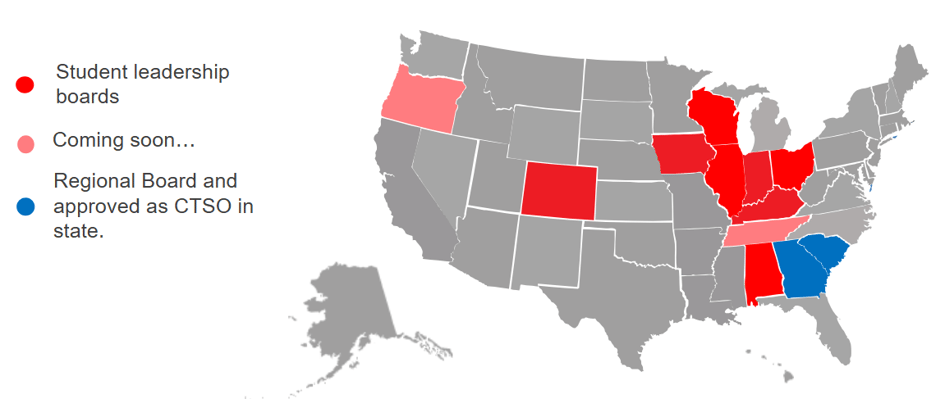
In addition to these in-team opportunities, some students participate in regional student leadership boards. These boards, hosted by FIRST partners across the country, allow students to:

  • Collaborate with peers from other teams
  • Represent student voices in FIRST planning
  • Launch community initiatives and outreach campaigns
  • Gain experience in civic engagement and public leadership

Thinking about starting a board in your region?

Check our map to see if one already exists in your state. If one does not, the blog post "How to Build a Youth Advisory Council" offers a helpful guide. For more information and support, contact firsteducation@firstinspires.org.

student-leadership-boards

Awards & Recognition

FIRST programs offer a wide range of awards that serve as career development opportunities for students while working as part of a team. These awards do more than celebrate success at events; they help students showcase the real-world skills they’ve gained through their team and connect those skills to careers they may pursue in the future.

Awards vary by program and may include recognition for:

  • Engineering design and creativity
  • Community impact and outreach
  • Entrepreneurial thinking
  • Team collaboration and inclusion
  • Coding, design, and technical innovation

Each award encourages students to develop career-ready competencies such as problem-solving, communication, and project planning. These skills align with national CTE standards and help students prepare for college or the workforce.

Visit the FIRST Events page for more information on awards specific to each program.

Student Leadership

FIRST Dean’s List Award

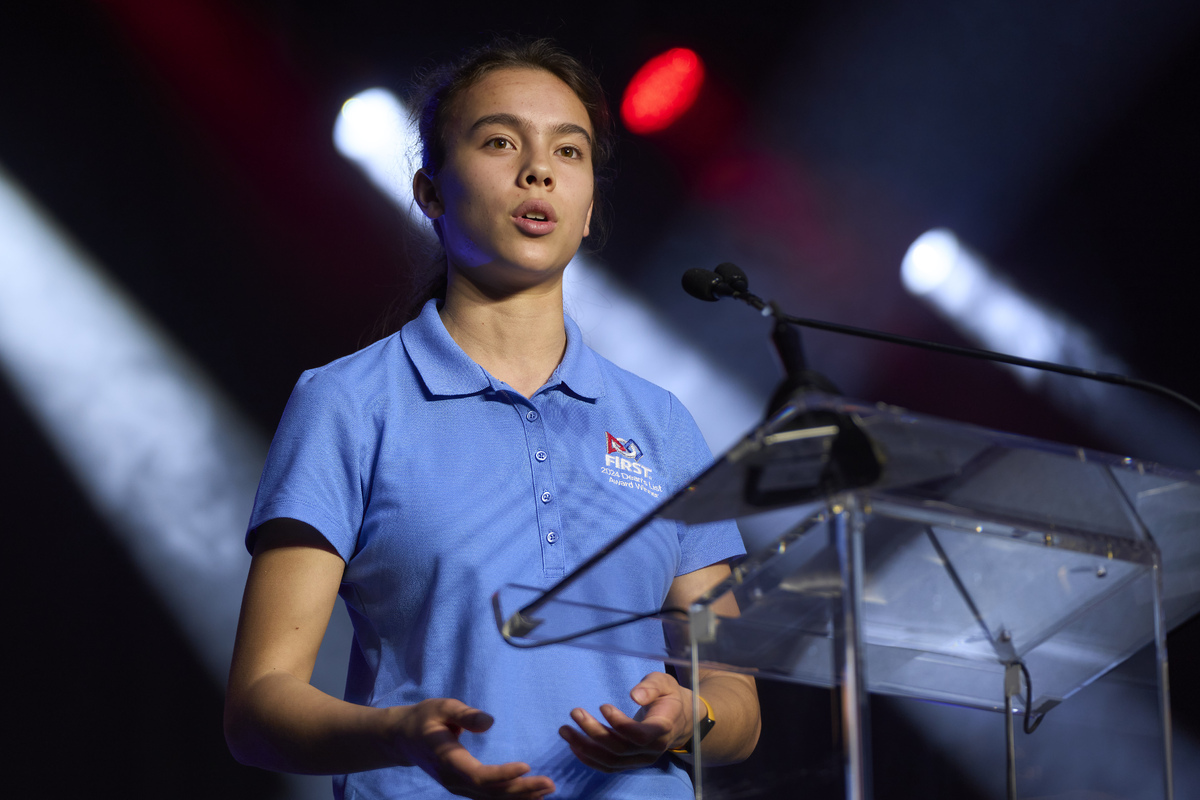
One of the most prestigious honors across FIRST® Tech Challenge and FIRST® Robotics Competition is the FIRST® Dean’s List Award. This award celebrates individual students who demonstrate leadership and commitment to FIRST Core Values, show exceptional technical expertise and passion for STEM, inspire others through creativity and dedication, and make meaningful contributions to their teams and communities. Students are nominated by their team mentors based on demonstrated leadership and dedication.
2024_dla_winners_1

See the Power of FIRST

From college readiness to STEM careers, the impact of FIRST goes far beyond the classroom. Explore how students who used these lessons grow– and where their FIRST journey takes them.